
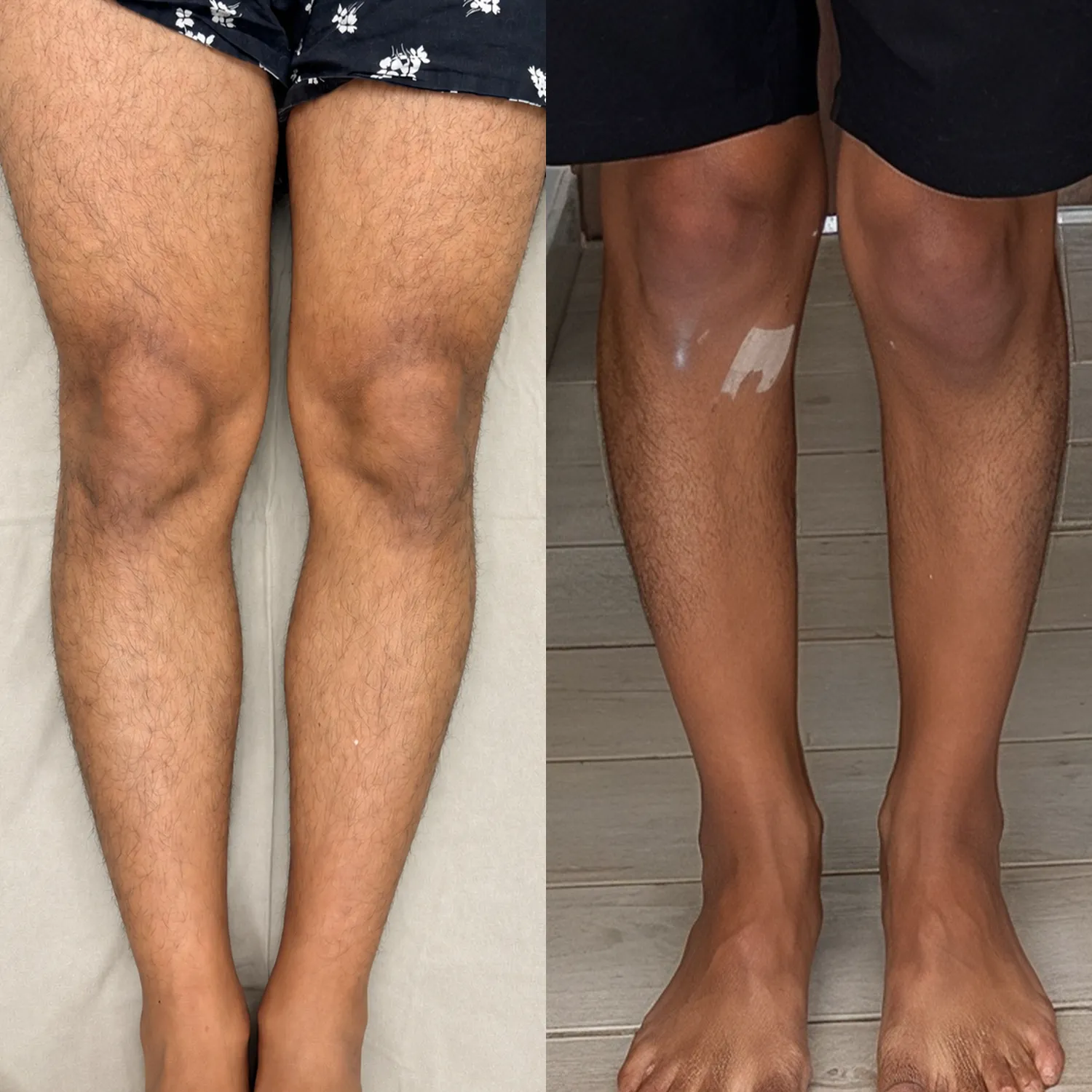
14° → 2°Bow legs · both tibiae
“The knee gap was the thing I saw in every photograph. Twelve weeks later it was gone and my knee pain went with it.”
Case 1 · age 31
Documented patient cases
Leg alignment correction is planned using clinical assessment and radiographic measurements. The examples below illustrate individual treatment outcomes and should not be considered a guarantee of similar results.
“The knee gap was the thing I saw in every photograph. Twelve weeks later it was gone and my knee pain went with it.”
Case 1 · age 31
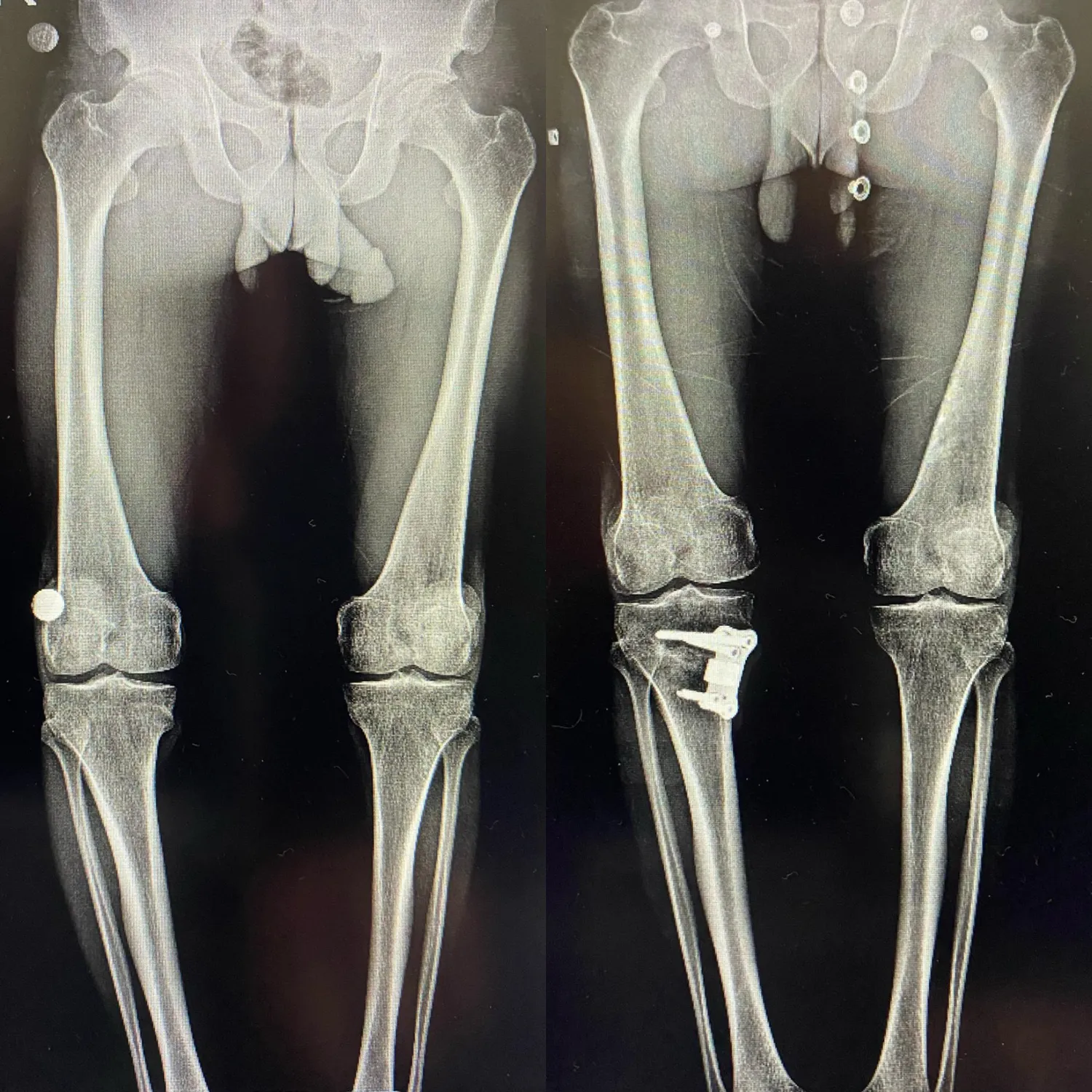
“I had been told for years to just do exercises. The X-ray showed the bend was in the bone. Exercises were never going to move it.”
Case 2 · United States · age 27
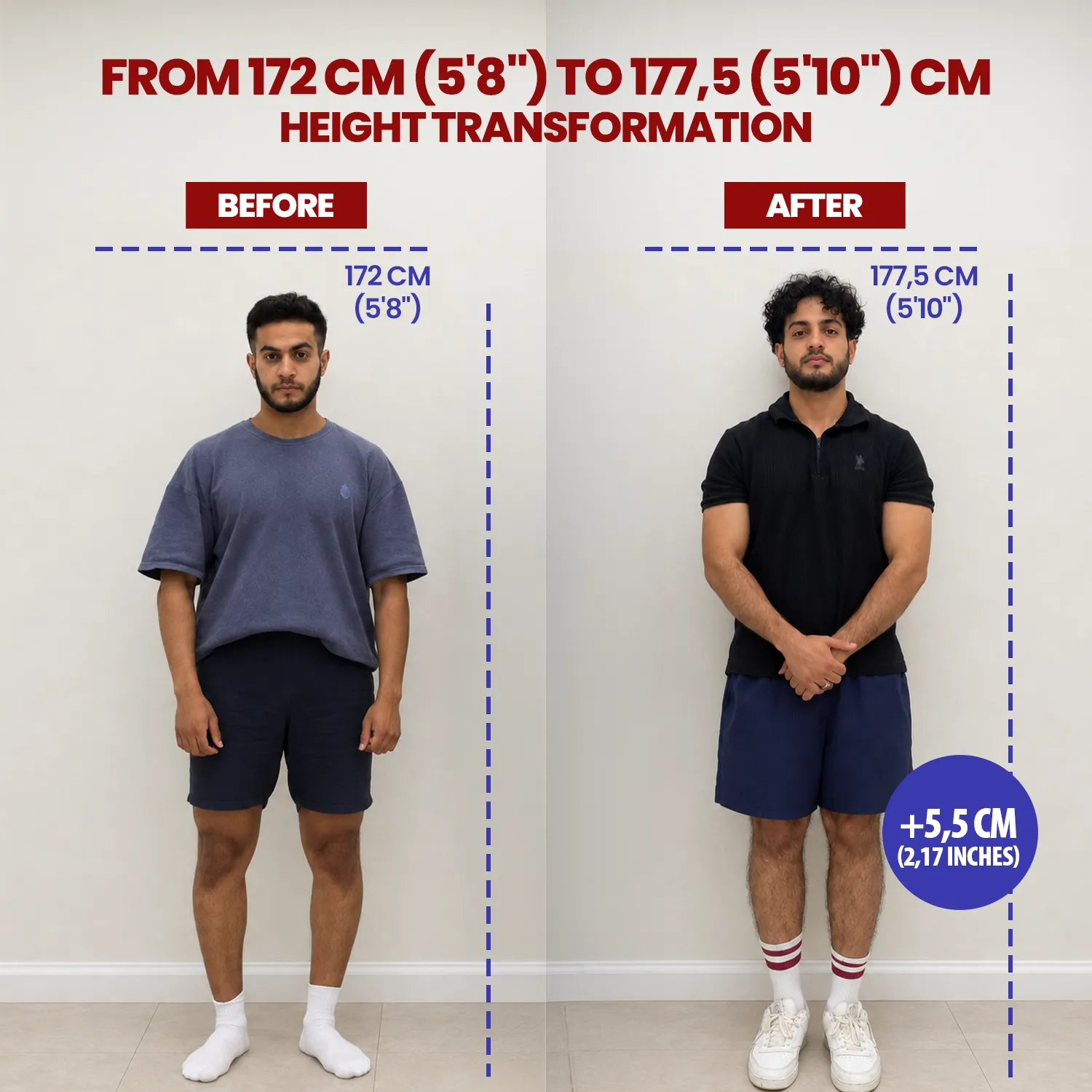
“Two bones per leg, one operation. I was walking with crutches the next day and unaided by week ten.”
Case 3 · Ireland · age 35
Results vary. The correction that can be achieved safely depends on where the deformity is located, its severity, age, general health and the condition of the knee joint, and is discussed with your surgeon after clinical examination and full-length standing X-rays. The images show individual outcomes and are not a prediction of your result. Photographs are published with signed patient consent.
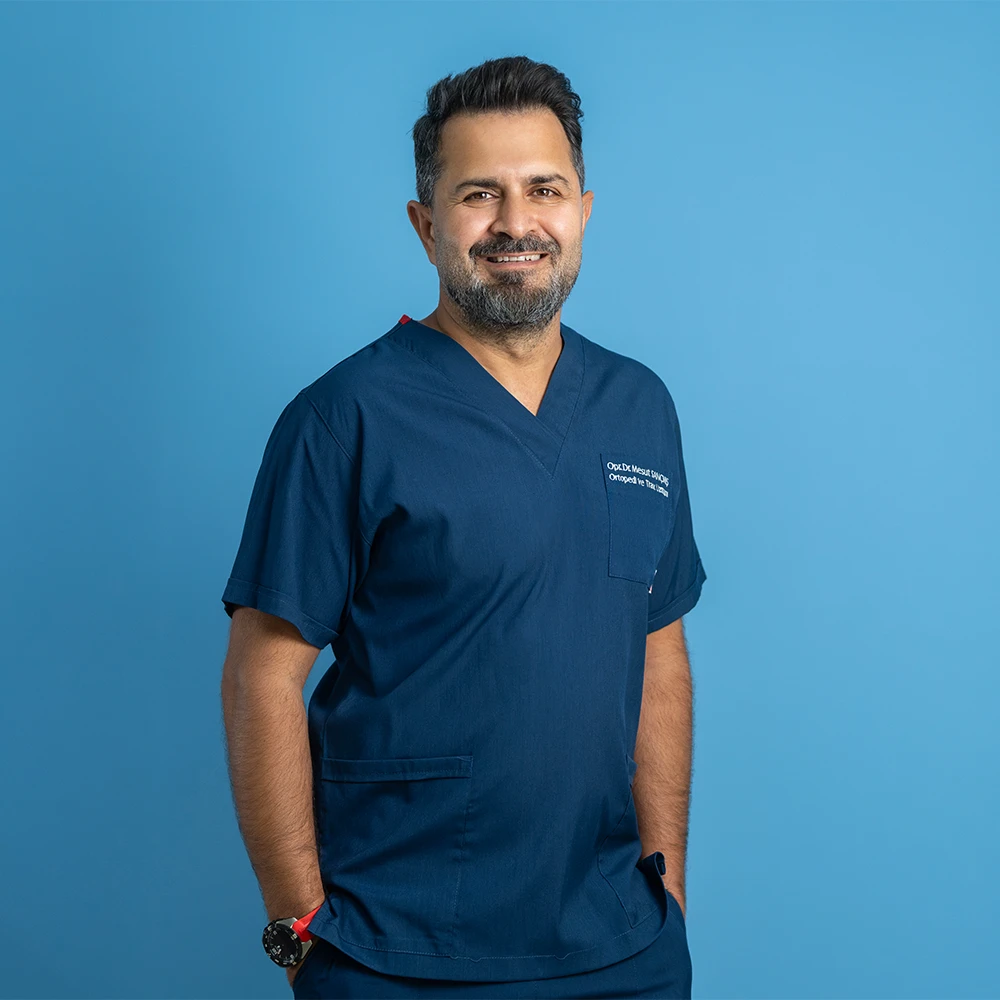
Dr. Mesut Sançmış
17 years
in orthopaedics and traumatology,
since 2009
Leg alignment correction requires an understanding of lower-limb anatomy, joint mechanics and bone healing. At MSM Clinic, treatment planning is led by Op. Dr. Mesut Sançmış, a specialist in Orthopaedics and Traumatology with experience in orthopaedic surgery and deformity correction.
Dr. Sançmış trained and practised at Akdeniz University Faculty of Medicine, worked for six years as a consultant in Turkish state hospitals and founded MSM Clinic in 2022.
Many patients first notice the shape of their legs, and that concern is taken seriously. Correction is planned around overall alignment and how the knee carries load, so the target is set by your X-rays and the health of the joint as well as by how the legs look.
Dr. Sançmış leads your assessment, performs your surgery and makes the clinical decisions at each review. Nursing care, physiotherapy and travel coordination are provided by the wider MSM team, working to his treatment plan.
Licensed for international patients
Ministry of Health Health Tourism Authorisation
Explainer videos
Short videos from MSM Clinic about treatment and what to expect.
MSM Clinic explainer — part 1
MSM Clinic explainer — part 2
MSM Clinic explainer — part 3
Google, Trustpilot and WhatClinic reviews
Read patient feedback about consultations, orthopaedic procedures and postoperative care at MSM Clinic. Many of these reviews relate to the clinic's wider orthopaedic services rather than leg alignment correction.
Reviews from across the practice — knee, foot and ankle, trauma and deformity work. This is the surgeon’s day job, not a sideline.
I fortunately came across Dr. Mesut while researching orthopedic surgeons in Antalya after suffering a severe heel fracture in the United States. From the beginning, I was uneasy with the treatment plan proposed by my U.S. surgeon. After more than a year of being told that it was simply a “bad break” that would take time to heal, it was finally discovered that I had also severely sprained my ankle at the time of the injury, resulting in partial ligament and tendon tears that had been missed entirely. When these tears were eventually identified, the solution I was given was ankle fusion surgery, an option that would have permanently limited my mobility. This did not sit right with me. While in Antalya for my spouse's dental care, I had the opportunity to consult with Dr. Mesut at MSM Klinik. His team quickly arranged comprehensive testing to fully understand what was happening with my foot. Dr. Mesut confirmed the ligament and tendon damage but was very clear that ankle fusion was not the appropriate solution for my case.
Service was excellent. I'm forever grateful to Surgeon Mesut Sancmis for taking care of me. I'm still recovering and have a follow up coming soon but I'm confident I will recover 100%. The whole staff was very attentive and professional. Starting with the driver, he was so helpful and nice assisting me with my wheelchair. Amy, who was with me throughout the whole process, made sure all my needs and concerns were addressed. I didn't feel there was a language barrier because she was there to translate and facilitate all my needs. Even after discharge Dr Mesut and Amy visited me multiple times to check on me and make sure everything was going well. I highly recommend them.
Dr Mesut and the team were exceptional and delivered excellent service. My issue was well investigated and management options and plans were provided. I am well satisfied with the service and happy with the outcome. Thank you again.
Superb service and very quick and professional, made me feel at ease, reassured me every step of the way. If you need pain blocking or facet joint injections then come here, they will solve your problem. From the minute I arrived I knew I had chosen the best surgeon and team to help me. I had an MRI and x-ray within an hour of my consultation, 2 hours later I had a full diagnosis and treatment plan, 20 minutes after that I had my treatment. They've taken away my pain and I'm so happy. I will return if I ever need help in the future, 100%.
I wish to take this opportunity to thank Dr Mesut Sançmış for his kind, caring and professional approach to my long term medical issues. He very efficiently examined, tested and diagnosed my medical issues and offered treatment of arthroscopic knee surgery for the following day. The surgery was an absolute success with my original pain now gone and the procedure stiffness subsiding daily. I can already walk and sleep better and my quality of life is improving. The constant pain etched on my face and in my daily life has gone and I can never thank him enough. He is a true gentleman and 5 star surgeon.
From the very beginning, I felt that I was in good hands with Dr. Mesut Sançmış. The consultation was clear, supportive and reassuring, which made me feel confident about moving forward. Throughout the treatment, Dr. Mesut Sançmış showed great care and professionalism, always making sure I was comfortable and informed. The results have exceeded my expectations — my feet not only look better, but I feel more confident and at ease in my daily life. It has truly been a positive change for me, both physically and emotionally. I am very grateful for the expertise, kindness and attention to detail. I would gladly recommend this clinic to anyone looking for high-quality, compassionate care.
MSM Klinik have been excellent. From the initial consultation, through the hospital procedure and the after care — absolutely fantastic. Communication about the knee procedure and the ease of making it happen, with genuine concern for your welfare and recovery. Highly recommend this great clinic. Thanks MSM.
Top orthopedic. We needed a hand surgeon for our son who had an accident with a knife. Great service via WhatsApp, they speak English. Modern clinic, all innovative methods, state of the art equipment. Near hotels in Lara and Kundu. Also good for international tourists.
I had a really painful neck and back. I had two therapy sessions and it really, really helped. I now don't feel pain and the movement in my back is so much better. Thank you!
Challenging or mild conditions require the type of specific attention provided. Dr. Mesut Sançmış and his entire staff are highly knowledgeable and solution focused. It is incredible to witness the difference their patient care delivers. Do you have back pain, shoulder issues, orthopedic problems? Here's your source for these and much more. Please don't hesitate to book your first consultation to start on the path of healing.
Alignment patterns
Bow legs and knock knees describe different patterns of lower-limb alignment. Some patients experience discomfort or functional difficulties, while others are primarily concerned about appearance. A detailed clinical assessment and full-length standing X-rays help determine the underlying cause and whether treatment is appropriate.
“O” shape
Bow legs describe an alignment pattern in which the knees remain apart when the ankles are brought together. Depending on the cause and severity, the condition may alter how weight is distributed across the knee joint.
“X” shape
Knock knees describe an alignment pattern in which the knees come together while the ankles remain apart. The effect on joint loading and function depends on the underlying anatomy and degree of deformity.
Femur and tibia
Some patients have alignment differences involving both the femur and tibia or additional rotational changes. These cases require detailed assessment to identify the appropriate correction strategy.
Osteotomy is a surgical technique used to correct bone alignment. Depending on the location and severity of the deformity, the surgeon may recommend correction at the tibia, femur or both. The procedure and fixation method are selected according to the patient's anatomy and treatment goals, and suitability depends on medical assessment.
High tibial osteotomy
Distal femoral osteotomy
Double-level osteotomy
Recovery following leg alignment surgery varies depending on the surgical technique, whether one or both legs are treated, bone healing and individual health factors. Your surgeon and physiotherapist will provide instructions on mobility, weight-bearing and rehabilitation.
Full-length standing X-rays of both legs, alignment measurement and an examination of the knee joint help establish where the alignment difference lies and whether surgery is appropriate.
From home · approx. 1–2 weeks
If surgery is recommended, the level and size of the correction and the fixation method are planned on your imaging before the operation.
Before surgery
A controlled cut is made in the tibia, the femur or both, and the bone is realigned and fixed. Whether one or both legs are treated in the same operation is decided individually.
Antalya · day 0
A short hospital stay, then walking with crutches and weight-bearing as instructed, physiotherapy, wound checks and a control X-ray before you are cleared to fly.
Antalya · first weeks
Weight-bearing increases gradually as the bone heals, guided by X-rays. Many patients stop using crutches within several weeks, but timing varies with the procedure and individual healing.
Home · approx. weeks 3–12
Return to driving, work, gym activities and sport depends on your recovery and your surgeon's clearance. Plate removal is not always necessary and, if advised, is usually considered later.
Home · approx. months 3–12
Like any major orthopaedic operation, osteotomy carries potential risks. These may include infection, delayed bone healing, nerve or blood vessel injury, blood clots, joint stiffness, implant-related discomfort and the possibility of further surgery. Your surgeon will discuss the risks relevant to your condition and proposed procedure before treatment.
The figures below come from published studies of osteotomy. They relate to different techniques and patient groups, so they show the nature of each risk rather than MSM Clinic's own results.
Some complications need further treatment or surgery. Your individual risk depends on where the deformity is located and the condition of your knee joint, and is discussed with your surgeon before you consent.
MSM Clinic's international patient team can assist with accommodation arrangements based on your treatment schedule, mobility requirements and personal preferences. Ramada Plaza Antalya is one accommodation option that can be discussed during treatment planning.
Ramada Plaza AntalyaAccommodation option · near the old town (Kaleiçi)
Distances are approximate.
For international patients
Travelling abroad for orthopaedic surgery requires careful preparation. Our international patient team helps coordinate your consultation, treatment schedule, accommodation and transport arrangements, with attention to your mobility needs during recovery.

Antalya Airport (AYT) is reachable from major US cities with one connection, usually via Istanbul. Our team arranges your transfers during treatment, with your mobility after surgery in mind.

Your accommodation is planned around your treatment schedule and your mobility after surgery. Our team will explain the options available, including Ramada Plaza Antalya, and whether accommodation is included in your package.

A named patient coordinator supports you from your first enquiry to your return home. Clinical instructions are given to you in writing, in English, so nothing depends on remembering a conversation.

Much of your recovery after osteotomy continues at home. MSM Clinic provides an individual follow-up plan, including guidance on imaging, rehabilitation and ongoing communication with the medical team, timed according to your procedure and recovery.
Remote reviews do not replace urgent medical care. If you develop a fever, increasing pain, redness or discharge, sudden swelling, calf pain, breathlessness, or new numbness or weakness, seek urgent local medical attention first and then contact us.
Before any deposit, you receive a written quotation setting out the proposed procedure, what is included, payment arrangements and any costs that may arise later.
Considering bow leg or knock knee correction in Turkey? Contact MSM Clinic to learn more about specialist assessment, available treatment options, recovery and costs. Our international patient team can help you understand the next steps.
Transparent pricing
The cost of leg alignment correction depends on the surgical technique, whether one or both legs require treatment, hospital arrangements and individual medical needs. Following assessment, you will receive a written quotation explaining the proposed procedure, included services and any additional expenses.
The technique, fixation method, recovery time and length of stay are set individually after assessment; timings on this page are estimates, not guaranteed outcomes. Your written quotation lists what is included and what is not, such as flights, a companion's costs or imaging in your home country, together with any costs that may arise if additional treatment is needed.
Your questions answered
It depends on the cause. In adults, physiotherapy and exercise can improve strength, flexibility and how the knee feels, but they cannot change the shape of a bone that has finished growing. If the alignment difference lies in the bone itself, only surgery can change it. Full-length standing X-rays show whether that is the case; where the appearance comes from soft tissue or posture rather than bone, surgery is not appropriate.
Only a clinical examination and full-length standing X-rays can answer that. They show the overall alignment of the leg, where any deformity is located and the condition of the knee joint. Your symptoms, activity level and goals are also taken into account. Many people with mildly bowed or knocked legs do not need surgery, and an osteotomy is recommended only when the expected benefits outweigh the risks.
In some cases, yes. Treating both legs in one operation means a single anaesthetic and one recovery period, but it also makes the early weeks more demanding, as neither leg can take full weight straight away. Whether to treat both legs together or one at a time depends on the type of correction, your general health and your circumstances, and is decided with your surgeon.
Osteotomy usually requires a much shorter stay than limb lengthening. Your stay covers surgery, a short hospital stay, early wound checks and physiotherapy, and a control X-ray before you are cleared to fly. The exact duration depends on the procedure and on whether one or both legs are treated, and it is stated in your treatment plan.
You will usually start walking with crutches shortly after surgery, following your surgeon's instructions on how much weight the leg can take. When crutches are no longer needed depends on the type of osteotomy, the fixation used, whether both legs were treated and how the bone heals on X-ray. For many patients this takes several weeks; your surgeon will give you an individual estimate.
Recovery is gradual. The early weeks focus on wound healing, safe walking and physiotherapy, and bone healing continues over the following months. Return to driving, work, gym activities and sport depends on your procedure, your job and your progress, and each step should follow medical clearance. Most of this recovery takes place at home, supported by follow-up reviews and local physiotherapy.
Where knee pain is linked to uneven loading caused by malalignment, correcting the alignment can reduce the load on the overloaded part of the joint and may improve symptoms. However, osteotomy cannot reverse cartilage damage that has already occurred, and it does not guarantee that pain will disappear. Your examination and X-rays help show whether alignment is likely to be a factor in your pain.
Risks include infection, delayed or incomplete bone healing, nerve or blood vessel injury, blood clots, joint stiffness, over- or under-correction and discomfort from the implant. Some complications need further treatment or surgery. The likelihood of each risk depends on the procedure, the size of the correction and your health, and your surgeon will explain the risks relevant to you before you consent.
Yes. An osteotomy requires an incision to perform the correction and place the fixation, usually on the inner side of the shin for tibial correction or on the side of the thigh for femoral correction. Scars usually fade over time, but they do not disappear completely. Your surgeon can explain where the incisions will be for your procedure.
Not always. Many patients keep their implants permanently without problems. Some find the plate uncomfortable, particularly on the shin where there is little soft tissue, and choose to have it removed once the bone has fully healed, usually after twelve to eighteen months. Whether removal is advised, and whether it is included in your package, is discussed with your surgeon and stated in your quotation.
You follow an individual follow-up plan covering X-rays, physiotherapy and contact with the medical team, with timing set according to your procedure and progress. You receive written information in English for your GP or local specialist. Remote reviews do not replace urgent care: if you develop a fever, increasing pain, swelling, calf pain, breathlessness or new numbness, seek local medical attention first and then contact us.
The cost depends on the technique, whether one or both legs are treated, the hospital arrangements and your individual medical needs. After assessment, you receive a written quotation explaining the proposed procedure, what is included — such as imaging, implants, hospital stay and physiotherapy — and any additional costs, including accommodation, transfers and possible further surgery. A final price is not given before assessment.
Bone growth must be complete, so treatment is for adults aged 18 and over. There is no fixed upper limit, but in older patients the condition of the knee joint matters more: if the joint is already significantly worn, a knee replacement or another treatment may be more appropriate than realignment. Your surgeon will advise after assessment.
From enquiry to Antalya
Tell us about your leg alignment concerns and provide any existing medical reports or X-rays. Our team will explain the information needed for an initial review.
Discuss your concerns with the medical team. A clinical examination and appropriate imaging help determine whether surgical treatment may be suitable.
If surgery is recommended, our team will help coordinate your treatment schedule, accommodation and practical travel arrangements.
Confidential Enquiry | English-Speaking Support | No Obligation
Why Antalya
Clinic, physiotherapy and accommodation within a short distance of each other, in a city your family will enjoy while you recover.
MSM Clinic · Muratpaşa, Antalya
A look at Antalya and the clinic, before you decide.